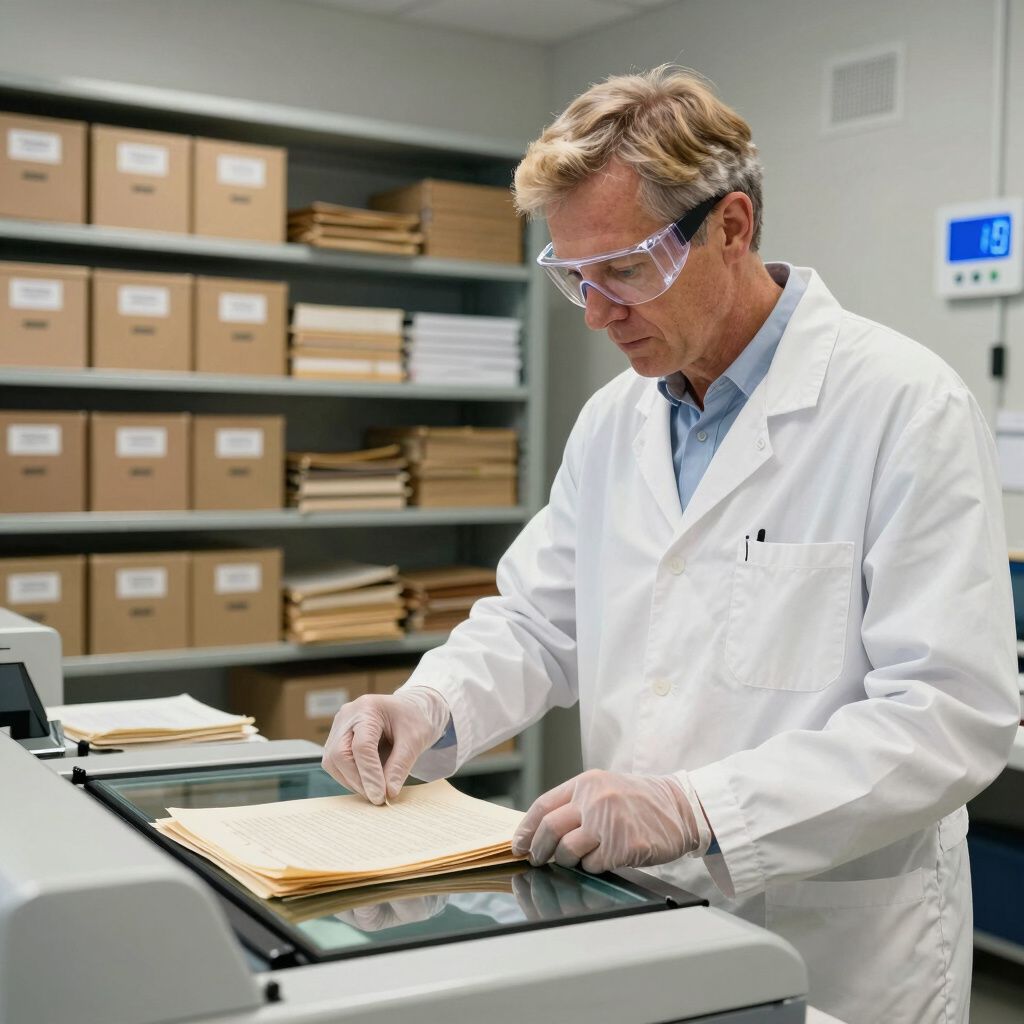
There’s a moment most organisations recognise instantly. A document is needed. Not tomorrow — now. It might be a contract, a historical record, a personnel file or a plan created years ago. Everyone knows it exists, but finding it is another story. Someone checks a filing cabinet. Then another. A box is pulled from storage. Time passes. Work pauses. This is the quiet frustration of paper-based information.
Access Tied to a Place
When records live on paper, access is tied to location. If the file is stored in a room, a building or an archive off-site, access is limited to whoever can physically reach it. Collaboration becomes slower. Research is interrupted. Decision-making waits. Digitisation removes that dependency. Digital records can be searched, retrieved and shared quickly, without physically handling the original document. Information becomes available to the people who need it — whether they’re in the office, working remotely or operating across multiple sites.
Speed Is Only Part of the Story
The real shift isn’t just speed — it’s confidence.
Confidence that:
- the correct record can be located in seconds
- staff aren’t relying on memory or manual searches
- collaboration doesn’t risk damaging fragile originals
Digitised records support smoother workflows, better communication and faster response times. Information stops being something you look for and becomes something you can simply use.
Making Knowledge Work Again
When records are digitised, organisations often rediscover their own information. Documents that were rarely accessed suddenly become valuable again — supporting research, planning and informed decisions. At its core, enhanced accessibility isn’t about technology. It’s about removing barriers between people and the information they rely on. And when those barriers disappear, work flows more naturally.