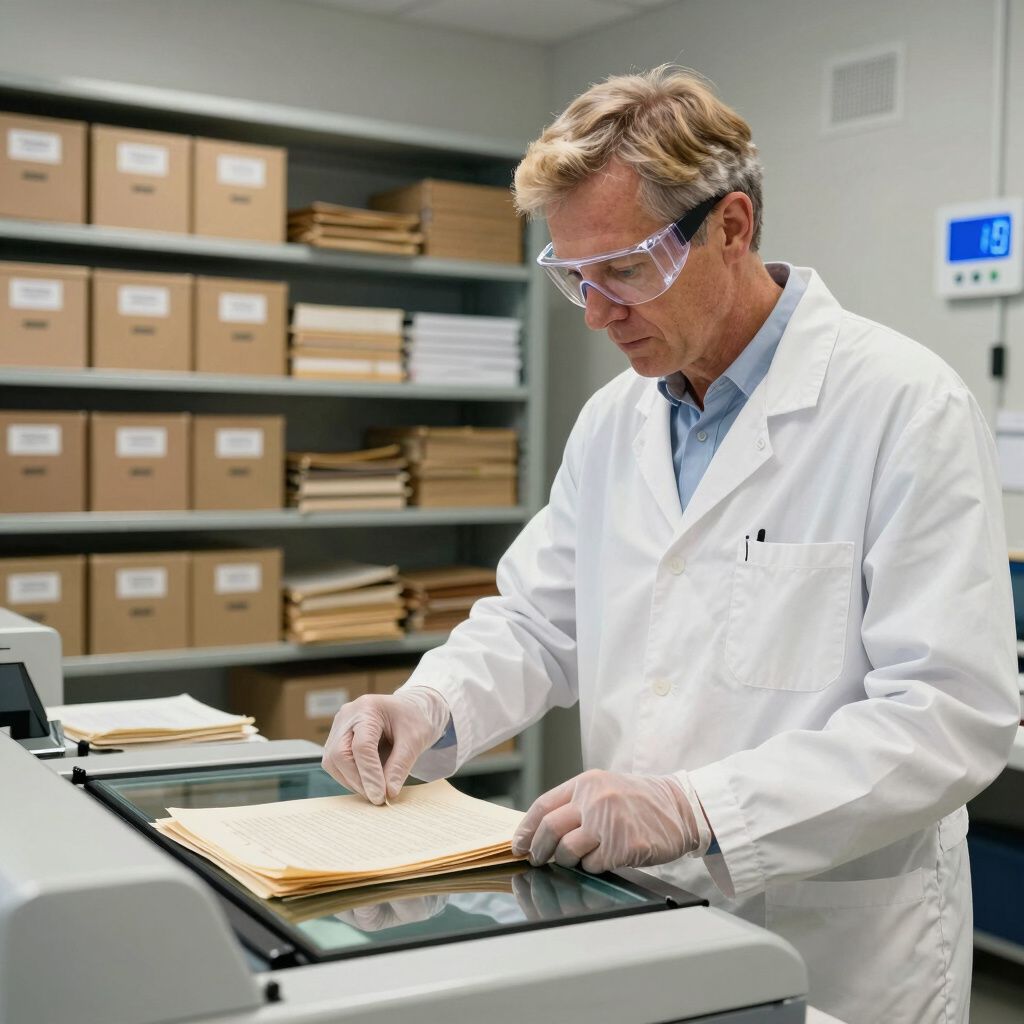
Every organisation carries knowledge that doesn’t exist in manuals or systems.
It lives in old reports, handwritten notes, correspondence, plans and records created long before today’s staff arrived. These documents tell the story of why decisions were made, how processes evolved, and what has already been tried.
But there’s a risk many organisations don’t realise until it’s too late.
Knowledge Walks Out the Door
People retire. Roles change. Teams restructure.
When that happens, undocumented knowledge often leaves with them.
Historic records are one of the few remaining anchors to institutional memory — but only if they can be found, read and understood. When records exist only in boxes or filing rooms, they become disconnected from daily operations. Over time, they’re forgotten.
Digitisation reconnects organisations with their own history.
Digitised records allow past decisions, policies and projects to remain accessible — not as archived relics, but as living references. They support continuity, reduce repeated mistakes and provide context that new teams can learn from.
From Storage to Insight
Historic data doesn’t lose value with age — it often gains it.
Trends become clearer. Long-term patterns emerge. Decisions can be evaluated with the benefit of hindsight. When records are digitised, indexed and searchable, organisations can extract insight that was previously locked away in paper.
This is particularly valuable for:
- long-standing organisations
- government and regulated industries
- infrastructure, planning and compliance-driven environments
Digitisation ensures that history remains a resource — not a burden.
Preserving More Than Documents
At its heart, digitising historic data is about respect.
Respect for the work that came before.
Respect for the people who created it.
Respect for the role it still plays in shaping the future.
Because when organisational memory is lost, it’s rarely replaced.
But when it’s preserved, it becomes a quiet strength.